Every Last Grain Speedrun - Fixed-Kit Rules, Route & Submission
Start an Every Last Grain speedrun in this independent edition by choosing Time trial. You receive a fixed kit on a fresh dune, the bag empties automatically, and one clock covers the attempt, including menus. Clear the field, choose a nickname and submit. Exploration clears use your own equipment and have a separate local best time.
These instructions cover the independent game on everylastgrain.xyz. Its equipment, finds and scores are separate from Oliver Kuso’s original Every Last Grain.
Choose your Every Last Grain speedrun mode
Exploration measures your developing build
An exploration-based Every Last Grain speedrun begins with whatever equipment you currently own. A spoon attempt and a developed vacuum attempt are different challenges. Menus pause exploration, and upgrades bought during a dune affect the remaining run. Copy result shares a personal summary rather than submitting an online entry.
Sandstorms preserve equipment, making later dunes useful Every Last Grain speedrun practice. Compare attempts with similar tools and skills if you want to judge a route change. A faster result after buying a vacuum does not, by itself, show that your movement improved. Keep the equipment difference in mind.
The online board uses the fixed kit
The ranked Every Last Grain speedrun mode sets your exploration save aside. It supplies Turbo Vacuum, the final carrying equipment and set skill ranks, without requiring you to earn them first. Maximum Digging rhythm gives a 760 kg/s limit; Treasure sense and faster walking are also available.
There is no selling route during this Every Last Grain speedrun: collected sand clears from the trial container automatically. You cannot buy a new build halfway through. Leaving restores the exploration save you entered with, rather than replacing your unfinished adventure or spending its cash on the trial equipment.
When an Every Last Grain speedrun clock runs
Prepare controls before starting
The Every Last Grain speedrun timer begins after the fresh trial is prepared. Opening menus, inspecting the collection or switching tabs does not stop it. Set sound, graphics and sensitivity before a scored attempt. Pausing the action only pauses your digging; time continues until the clear is recorded.
For a desktop Every Last Grain speedrun, check mouse capture and a comfortable view size. On mobile, check thumb placement. Auto dig reduces the number of controls you hold, but turns off when a panel opens or you leave the game. Enable it again after returning if you want to resume that way.
A tool rate is not a promised record
The field contains 10,000 kg, but an Every Last Grain speedrun also includes turns, empty ground and final scattered patches. Dividing mass by displayed rate ignores those costs. No route here is claimed as a measured record, and this guide does not promise that a player will finish under one minute.
Oliver Kuso’s original has separate Every Last Grain speedrun times from a different implementation. Similar tools and visible mass do not make those runs equivalent. Compare this site’s accepted trial results with each other; do not mix them with screenshots or records from the itch.io original.
Build a route with less cleanup
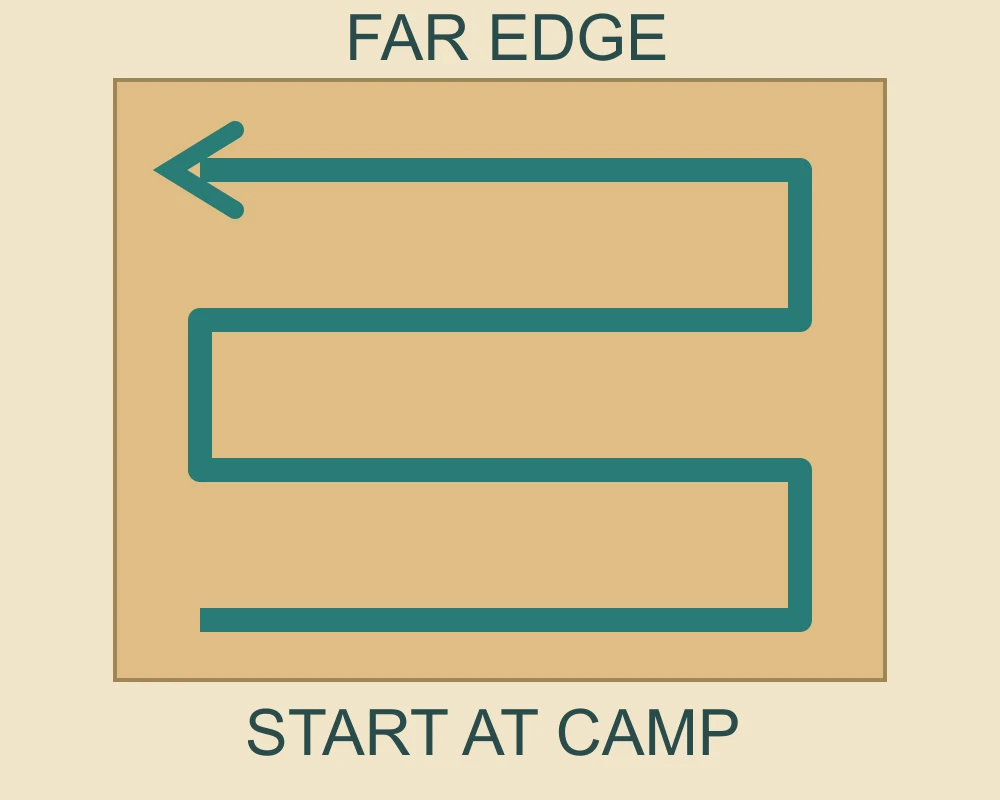
Cover neighboring strips
A consistent Every Last Grain speedrun route starts at one side and advances through adjacent bands. The trial tool has a 3.15 meter radius. Let passes overlap slightly, rather than leaving a thin ridge between them. Keep the center marker over visible sand as you move.
Scraping exposed clay wastes an Every Last Grain speedrun pass because there is nothing left to collect. Turn toward the next mound once a patch is bare. Repeated sharp turns make it harder to remember where you have worked; a connected cleared area gives you a visible record of the route.
Flatten shoulders, then inspect their bases
Sand settling changes an Every Last Grain speedrun route as you dig. Material from a steep shoulder can move into a new hole, requiring another pass. Sweep across the shoulder and widen the low patch rather than holding your aim in a narrow pit while the surrounding slope remains high.
After passing a slope during an Every Last Grain speedrun, glance at its base. A low-looking patch can retain an edge visible only from another angle. Turn enough to inspect that edge without forgetting the next strip. The goal is a connected bare floor, not the greatest possible number of sudden direction changes.
Change technique for the final patches
The end of an Every Last Grain speedrun rewards a slower visual check. Early on, almost any untouched mound has useful sand; near completion, broad laps may repeatedly miss one small patch. Use the kilograms-left display to check collection, then follow the golden marker to the final patch.
The completion check finishes tiny residue and recovers outstanding finds. An Every Last Grain speedrun does not require clicking every object individually. If you want to uncover each one deliberately, use exploration and the 14-find route, where there is time to inspect its position before moving on.
Make the controls fit your route
Use a comfortable desktop digging control
For an Every Last Grain speedrun with fewer held mouse inputs, use E, Space or Auto dig. W, A, S and D move; arrow keys can turn the view without mouse capture. Lower sensitivity if small motions throw the marker away from the patch. Keep the direction of travel visible rather than looking only at your feet.
Practice the mobile thumb arrangement
Before a mobile Every Last Grain speedrun, test the left stick and right-side look gesture in exploration. Auto dig lets your other thumb focus on steering; a held Dig button gives an explicit stop. Avoid browser navigation edges when possible, particularly on a narrow phone with little spare space.
A choppy Every Last Grain speedrun is harder to steer through the final fragments. Lower graphics if turning becomes uneven. If the browser interrupts a touch, lift your fingers and establish the gesture again. The trial clock keeps running, so restarting may be preferable after a badly interrupted attempt.
Submit an Every Last Grain speedrun
Wait for the completed result
A completed Every Last Grain speedrun offers a nickname field and Submit time. Use 2–18 letters, numbers, spaces, underscores or hyphens, without personal information. Wait for the accepted response. A failed request is not a place on the board, and copying a result elsewhere does not submit it.
If your Every Last Grain speedrun submission fails, keep the result open and read its message. Use troubleshooting for a persistent problem instead of deleting your exploration save. Race again starts another trial; Back to my dune restores the adventure you set aside.
Improve one identifiable part of the run
Before restarting an Every Last Grain speedrun, identify one avoidable delay: an untouched edge, a missed ridge, a menu adjustment or too much time aimed at clay. Change that detail on the next attempt. It gives you something useful to compare even when the final number does not improve.
You can start an Every Last Grain speedrun, check the accepted trial leaderboard or revisit the full controls guide.